Running a small business means wearing multiple hats — and HR is often the one that gets the least attention until something goes wrong.
A key employee resigns with no backup plan. A new hire turns out to be the wrong fit. Your team doubles in size but your processes haven’t kept up. Sound familiar?
The good news is that effective HR planning does not require a large HR department or a big budget. It requires the right approach — one that is practical, simple, and built for the realities of running a small business or SME.
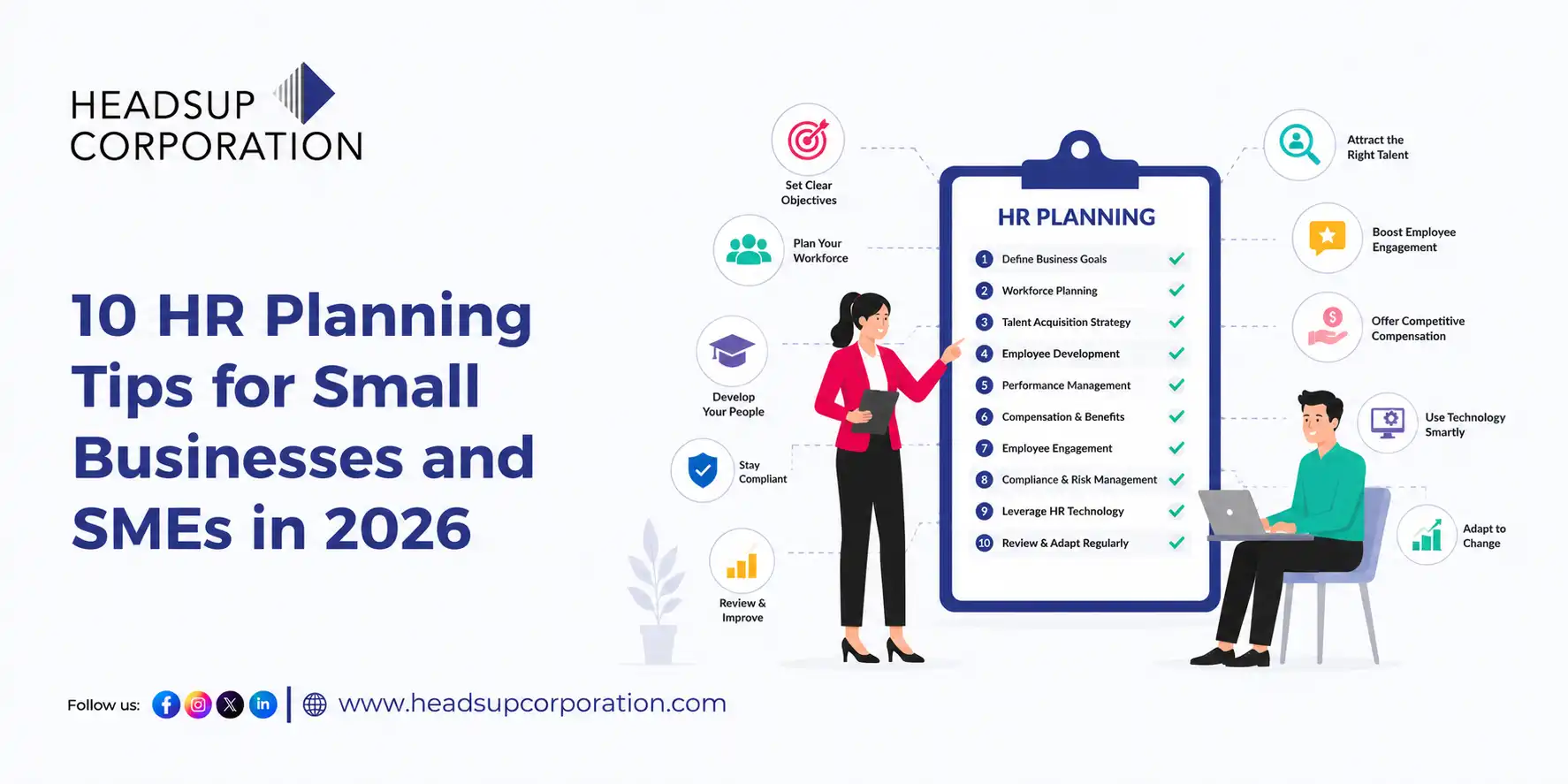
Here are 10 HR planning tips that will help you build a stronger, more resilient team in 2026.
1. Start with a Simple Workforce Audit
Before you plan for the future, understand where you stand today.
For most SMEs, this does not need to be a complex exercise. Take stock of your current team — their skills, roles, performance, and potential. Identify who your key people are, where the gaps are, and which roles are at risk if someone leaves.
A simple spreadsheet with your team’s names, roles, key skills, and tenure is enough to start. The goal is clarity — not complexity.
Action: Block two hours this week to do a basic workforce audit. You will be surprised what you learn.
👉 Learn more: 7 Steps of Human Resource Planning Process in HRM
2. Plan Your Hiring 6 Months Ahead
Most small businesses hire reactively — when someone leaves or when the workload becomes unmanageable. This leads to rushed hiring decisions, expensive mistakes, and gaps in productivity.
Instead, look ahead. What roles will you need in the next 6 to 12 months based on your business growth plans? Which current team members are likely to move on? Are there skills your business will need as it scales?
Planning your hiring calendar 6 months in advance gives you time to find the right people — not just the available ones.
Action: Create a simple 12-month hiring plan. Even if it changes, having it forces you to think ahead.
👉 Explore: Headsup Corporation’s Talent Search Advisory
3. Define Roles Clearly Before You Hire
One of the most common and costly SME hiring mistakes is writing vague job descriptions that attract the wrong candidates.
Before posting any role, get clear on three things: what does success look like in this role after 90 days, what skills are truly essential versus nice to have, and how does this role connect to your business goals?
A well-defined role attracts better candidates, sets clear expectations from day one, and reduces the risk of a bad hire.
Action: Before your next hire, write a one-page role brief — not just a job description. Include what success looks like, who they will work with, and what problems they will solve.
4. Build Your Employer Brand Even on a Small Budget
Top candidates have choices. Even as an SME, you are competing with larger companies for the same talent. Your employer brand — how people perceive you as a place to work — matters more than most small business owners realise.
The good news is that employer branding for SMEs does not require a big budget. It starts with your team’s experience. Happy employees share their experiences online. A strong LinkedIn presence, honest Glassdoor reviews, and a clear “why work with us” message on your website can make a significant difference.
Action: Ask your best employees what they love about working with you. Use their answers to craft your employer brand message.
👉 Read more: What is Employer Branding and Why is it Important?
5. Create a Simple Onboarding Process
Hiring the right person is only half the battle. How you onboard them determines whether they stay and thrive — or leave within the first 90 days.
Research consistently shows that employees who go through a structured onboarding process are significantly more likely to stay beyond their first year. For SMEs, where every hire matters, this is critical.
Your onboarding process does not need to be elaborate. It needs to cover the basics well — company culture and values, role expectations, key relationships, tools and systems, and a 30-60 90 day plan.
Action: Create a simple onboarding checklist that every new joiner goes through in their first two weeks. Assign a buddy to help them settle in.
6. Invest in Learning and Development — Even With a Small Budget
One of the top reasons employees leave SMEs for larger companies is the perceived lack of growth opportunities. You may not be able to match a large company’s L&D budget — but you can create a culture of learning.
This can be as simple as funding one relevant course per employee per quarter, creating opportunities for cross-functional learning within your team, encouraging knowledge-sharing sessions, or assigning stretch projects that build new skills.
The goal is to show your team that you are invested in their growth — not just their output.
Action: Have a five-minute conversation with each team member this month about their learning goals. It costs nothing and builds enormous loyalty.
👉 Explore: Headsup Corporation’s People Advisory Services
7. Have a Succession Plan for Your Top 3 Roles
Most SME owners do not think about succession planning until a key person hands in their notice — and then it is too late.
You do not need a formal succession plan for every role. Start with your top three most business critical positions. For each one, ask: if this person left tomorrow, what would happen? Is there someone internally who could step up with the right development? What institutional
knowledge would we lose?
Having even a basic answer to these questions puts you miles ahead of most small businesses.
Action: Identify your three most critical roles and one potential successor for each. Start a simple development conversation with them.
👉 Read more: How Succession Planning Can Help Your Firm
8. Conduct Regular Stay Interviews
Most businesses only find out why employees leave after they have already decided to go — through an exit interview. By then, it is too late.
Stay interviews are short, informal conversations with current employees to understand what keeps them engaged and what might cause them to leave. They are one of the most underused and most effective retention tools available to SMEs.
Ask your team: what do you enjoy most about your role? What would make you consider leaving? What would make you stay long-term? What can we do better?
The insights you get will be more honest and actionable than any engagement survey.
Action: Schedule 20-minute stay interviews with your top five employees this quarter.
9. Use Exit Interviews to Prevent Future Attrition
When someone does leave, make sure you learn from it.
A structured exit interview — conducted by someone neutral, not the direct manager — can reveal patterns in your culture, leadership, or processes that you would never otherwise see. Over time, exit interview data becomes one of the most valuable sources of honest feedback available to an SME.
The key is to act on what you hear. If three people in a year mention limited growth opportunities, that is a pattern — not a coincidence.
Action: Implement a simple exit interview process for every departing employee. Review the feedback quarterly and look for patterns.
👉 Try: Headsup Corporation’s Milestones exit interview tool
👉 Read more: The Ultimate Exit Interview Guide
10. Review Your HR Plan Every Quarter
HR planning is not a once-a-year exercise. Business conditions change, people change, and your workforce needs change with them.
Set a recurring calendar reminder to review your HR plan every quarter. Check whether your hiring plan is on track, whether your key people are still engaged, whether any roles have evolved, and whether you are on track to build the team your business needs in the next 12 months.
This does not need to take more than an hour. The discipline of doing it consistently is what makes the difference.
Action: Block two hours at the end of each quarter for an HR review. Treat it like a business review — because it is one.
Common HR Planning Mistakes SMEs Make
Even well-intentioned small business owners make these mistakes:
Hiring for today, not tomorrow — Hiring someone who fits your current needs but not where you are heading in 12 months creates expensive churn.
Skipping the onboarding — A great hire can become a disengaged employee in 90 days if onboarding is poor.
Treating HR as admin — HR planning is a strategic function. The businesses that treat it that way consistently outperform those that don’t.
Waiting for problems to plan — The best time to plan your workforce is before you need to. The second best time is now.
Where to Start
If you are feeling overwhelmed, start with just three things:
- Do a basic workforce audit this week
- Plan your hiring for the next 6 months
- Schedule stay interviews with your top five people this month
These three actions alone will put your HR planning ahead of most SMEs in India.
How Headsup Corporation Helps SMEs
Headsup Corporation works with startups and growing SMEs across India to build HR strategies that are practical, scalable, and aligned with business goals.
From talent acquisition and people advisory to HR gap analysis and exit interview tools — we help small businesses build the HR foundation they need to grow confidently.
👉 Talk to our HR experts today
Also read: