Collecting employee feedback has never been easier. Turning that feedback into meaningful change is where most organizations still struggle. That gap is exactly what AI employee feedback tools are designed to close, using machine learning to surface patterns humans would take weeks to find manually.
The Problem with Traditional Feedback Analysis
Open-text survey responses are a goldmine of insight and a nightmare to process at scale. A 500-person company running a quarterly pulse survey might generate thousands of free-text comments. Reading and categorizing all of it manually is slow, inconsistent, and prone to bias, the loudest or most memorable comments tend to get outsized attention, while quieter but widespread concerns go unnoticed. This is where AI feedback tools change the equation. Natural language processing can scan every comment, group them into themes, and flag sentiment shifts across teams or time periods, work that would otherwise take an HR analyst days to complete.
What AI Actually Adds to Employee Feedback
It helps to be specific about what AI contributes, since the term gets used loosely:
- Sentiment analysis, classifying feedback as positive, neutral, or negative at scale, and tracking how sentiment shifts over time.
- Theme detection, automatically clustering comments around recurring topics like workload, management, or communication, even when employees phrase things differently.
- Anomaly flagging, surfacing sudden drops in sentiment for a specific team or location before they show up in turnover numbers.
- Predictive signals, some employee feedback analytics platforms now use historical patterns to flag teams at higher risk of disengagement or attrition.
None of this replaces human judgment. It reduces the volume of raw data a person needs to sift through so they can spend their time on interpretation and action, not data entry.
From Insight to Action: Where Most Programs Fall Short
Even with strong analytics, many feedback programs stall at the same point: insights get generated, but nothing changes. Employees notice this fast, and it’s one of the quickest ways to kill trust in a feedback program. If people sense their input goes into a dashboard nobody acts on, response rates drop and honesty drops with them.
Closing that gap requires a few deliberate steps:
- Assign ownership. Every theme or flagged issue needs a named owner responsible for a response, not just an HR team member logging it.
- Set a response timeline. Even a “we heard this and here’s what we’re looking into” update within a set window builds trust.
- Share it back. Summarizing findings and planned actions to the employees who gave the feedback closes the loop visibly.
- Track follow-through. Some platforms now include action-tracking features specifically so commitments don’t quietly disappear.
Where AI Fits Into an HR Team’s Workflow
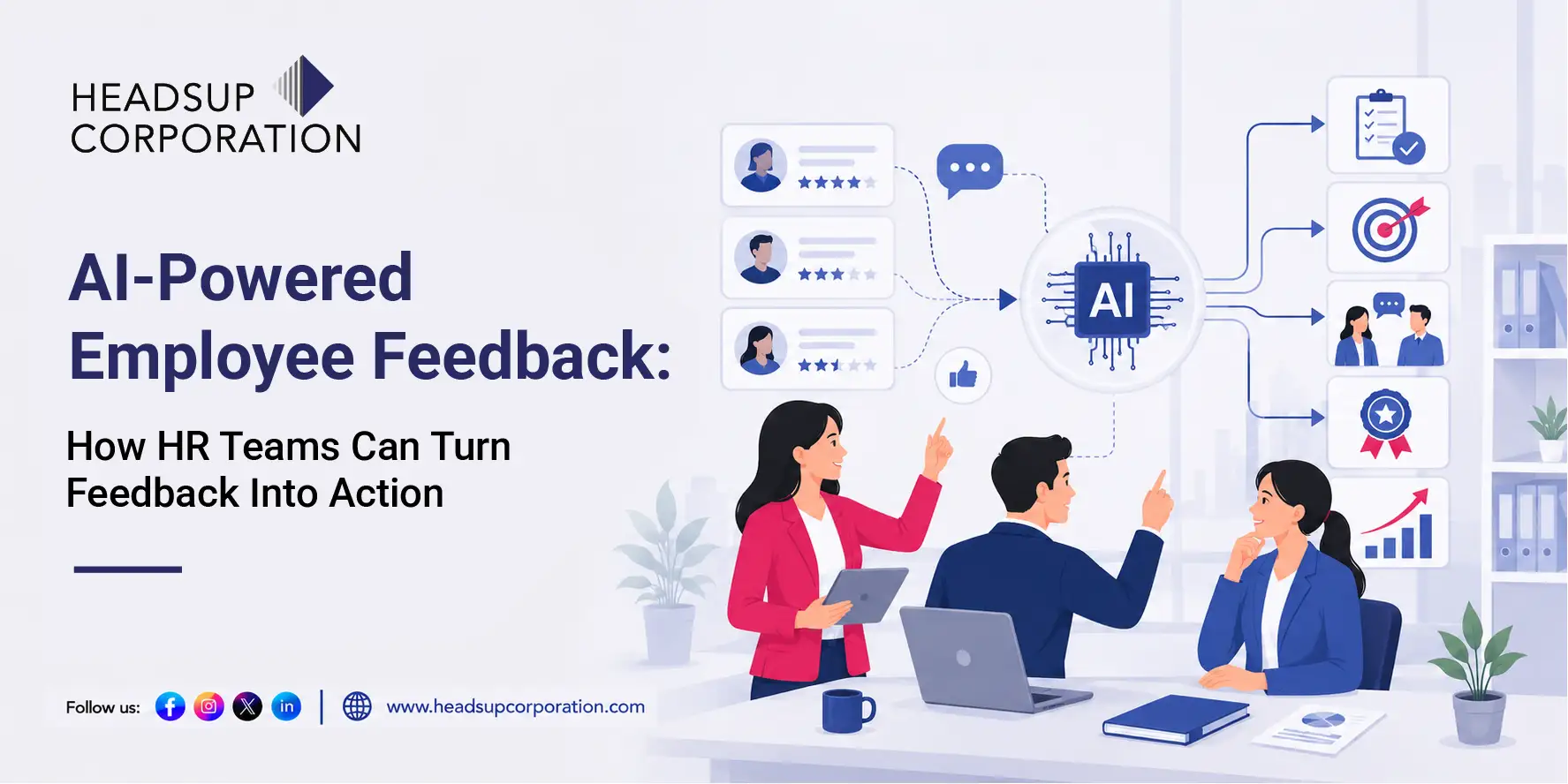
AI-powered feedback tools work best as an amplifier for HR teams, not a replacement for them. A realistic workflow looks like this: pulse surveys and open channels collect feedback continuously, AI analyzes and clusters it into digestible themes, HR and managers review the flagged patterns, and action items get assigned and tracked. The AI handles the volume; people handle the judgment and follow-through.
What to Watch Out For
AI-powered feedback analytics isn’t without pitfalls. Sentiment models can misread sarcasm, cultural nuance, or non-native phrasing. Over-reliance on automated flags without human review can also lead to overreacting to short-term noise rather than genuine trends. And employees deserve transparency about how their comments are being analyzed, especially if anonymity is part of the deal, trust erodes quickly if people feel an algorithm is reading between the lines of their words in ways they didn’t expect.
Final Thoughts
AI hasn’t changed the fundamental goal of employee feedback, understanding how people experience their work and improving it. What it has changed is the speed and scale at which organizations can find patterns worth acting on. The tools that will matter most in 2026 aren’t the ones with the flashiest AI features, but the ones that make it easiest for HR teams to go from insight to visible action.