The Future of Jobs Report 2025 from the World Economic Forum estimates that by 2030, 22% of jobs globally will be disrupted as AI, the green transition, and demographic shifts reshape labour markets. India sits at the centre of this storm; approximately 92 million existing jobs may become obsolete even as new roles emerge in AI, data science, green tech, and digital finance.
The honest answer is that most are not, and that gap is exactly where building future-ready teams becomes the single highest-leverage investment an Indian organisation can make this year. The companies that act systematically will own the next decade; those that delay will be hiring frantically in 2028 for capabilities they could have built internally for a fraction of the cost.
Why Building Future-Ready Teams Now Is a Boardroom Priority
The economics are decisive. Upskilling the existing workforce is the most commonly cited workforce strategy among global business leaders for the next 12 to 18 months, with 47% ranking it among their top three priorities.
Deloitte research shows that skills-based organisations are 98% more likely to be seen as places where employees can grow, and 98% more likely to retain top performers. Gallup estimates that a 100-person company spends an average of $2.6 million each year replacing lost talent, a number that dwarfs even ambitious learning budgets. In India specifically, the falling shelf-life of technical skills to around 2.5 years means that hiring fresh talent for every new capability is a losing strategy; building future-ready teams from within is faster, cheaper, and more loyal.
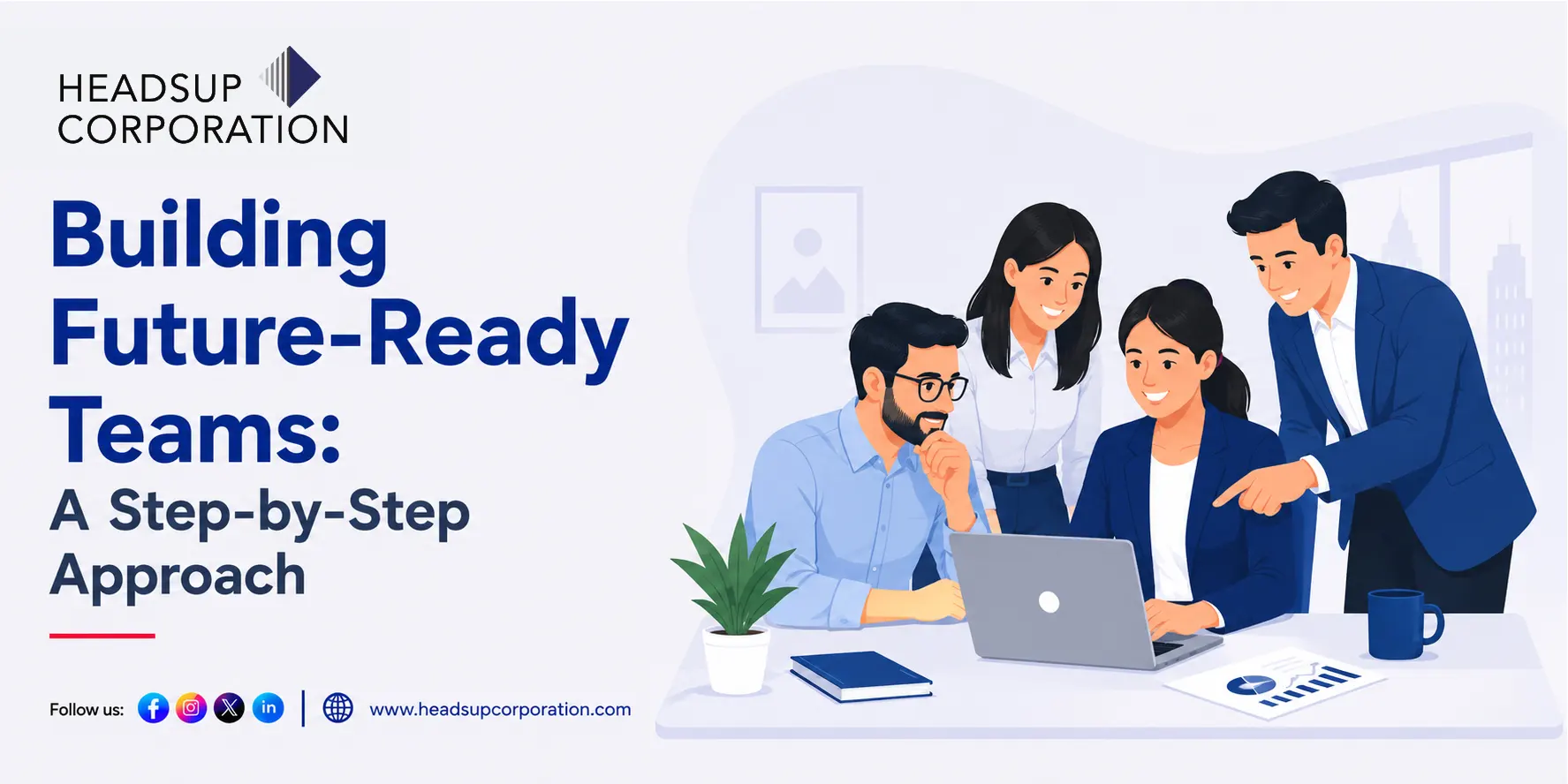
A Step-by-Step Approach to Building Future-Ready Teams
- The first step in building future-ready teams is diagnosing the future, meaning a clear-eyed view of which capabilities your business will need in 18 to 36 months based on strategy, sector trends, and AI exposure.
- The second step is mapping current skills against future needs, ideally through a structured skills inventory rather than gut feel, surfacing both gaps and the adjacent skills that make reskilling feasible.
- The third step is designing personalised learning pathways that link directly to career outcomes, because adults invest in learning that visibly changes their trajectory, not in catalogues of optional courses.
- The fourth step is embedding learning into the flow of work, using microlearning, AI-powered nudges, and on-the-job projects rather than relying on quarterly off-sites.
- The fifth step is building a coaching culture, equipping managers to develop their people week by week, since the manager remains the single biggest determinant of whether learning sticks.
- The sixth step is rewarding skill acquisition through internal mobility, project allocation, and visible recognition, ensuring employees see a return on their learning investment.
- The seventh step is measuring outcomes, tracking time-to-productivity, internal mobility rates, and skill density rather than course completion percentages, the metric that most Indian L&D dashboards over-rely on.
- The eighth step is leadership modelling, because building future-ready teams collapses the moment senior leaders signal that learning is for everyone except them.
How to Sustain the Momentum
Most reskilling programs fail not at launch but in the second year, when the novelty fades and budget pressure returns. The discipline that sustains building future-ready teams is to integrate skills data into hiring, promotion, and performance decisions, making capability the currency of progression in your organisation. Public commitments help; companies that publish skills frameworks externally tend to follow through internally.
How Headsup Helps Indian Organisations in Building Future-Ready Teams
Headsup Corporation designs and executes capability-building roadmaps for Indian startups and large enterprises serious about building future-ready teams. Our consultants conduct skills audits, build competency frameworks aligned to your business strategy, design learning pathways that integrate with your performance management system, train managers as coaches, and measure outcomes that matter to your CFO. Whether you are restructuring a 50-person team for an AI-heavy roadmap or scaling a 500-person workforce for new geographies, we build the talent engine rather than rent it.
Ready to start building future-ready teams in your organisation? Talk to Headsup Corporation for a structured capability roadmap.