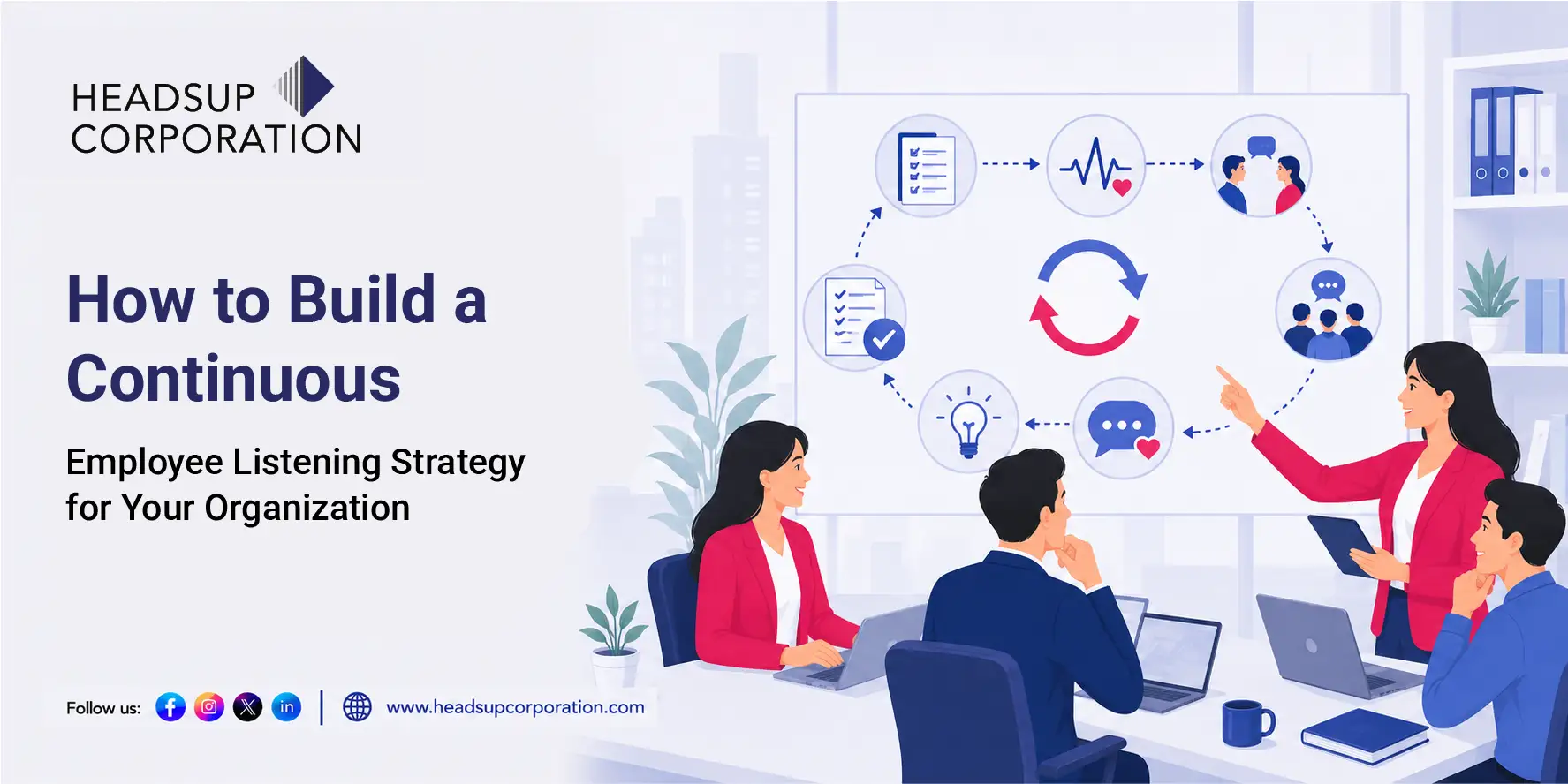
Continuous listening is quickly becoming the standard for how organizations understand employee sentiment, but adopting the right tools is only part of the equation. Without a clear strategy behind it, even the best employee listening platform can end up producing more noise than insight. Here’s how to build a continuous employee listening approach that actually works.
Start with What You’re Trying to Learn
Before choosing survey cadences or tools, get specific about the questions your organization actually needs answered. Are you trying to catch early burnout signals? Understand reactions to a recent reorg? Track long-term culture trends? An employee listening strategy built around vague goals (“understand engagement”) tends to produce vague, hard-to-act-on data. Specific goals lead to specific, useful questions.
Layer Multiple Feedback Channels
No single channel captures the full picture. A well-rounded listening strategy typically combines:
- Pulse surveys for frequent, lightweight sentiment checks
- Always-on feedback channels for issues that arise between scheduled surveys
- Manager check-in notes for context that structured surveys miss
- Annual or biannual deep-dive surveys for broader, strategic questions
- Exit and stay interviews to understand decisions at key transition points
Each channel compensates for what the others miss, pulse surveys catch speed, deep surveys catch depth, and open channels catch things nobody thought to ask about.
Define Ownership Before You Launch
One of the most common reasons listening strategies stall is unclear ownership. Before rolling anything out, get clear on who reviews the data, who is responsible for flagging significant trends, and who owns following up on specific issues. Without this clarity, feedback often gets collected but never acted on, which damages trust faster than not asking at all.
Set a Cadence That Matches Your Organization’s Pace
Fast-moving, high-change organizations typically benefit from more frequent, lighter-touch listening; more stable organizations may need less frequency but more depth. The right cadence isn’t about following a best-practice number, it’s about matching the frequency of listening to the frequency of meaningful change happening internally.
Build the Feedback Loop Into the Strategy From Day One
The single biggest predictor of a listening strategy’s long-term success is whether employees see their feedback lead to visible action. This needs to be planned for structurally, not left to chance:
- Set expectations upfront about how and when results will be shared
- Build in a standing process for reviewing themes and assigning owners
- Communicate outcomes even when the outcome is “we’re still working on this”
Measure the Strategy Itself
A listening strategy should be evaluated the same way any other program is, track response rates over time, monitor whether sentiment trends correlate with real organizational changes, and periodically ask employees directly whether they feel heard. If participation declines or trust erodes, that’s a signal to revisit the approach, not just the tooling.
A continuous listening strategy isn’t defined by how much data it collects, it’s defined by how reliably that data turns into action employees can see. Getting the tools right matters, but the strategy underneath them, clear goals, layered channels, defined ownership, and a genuine feedback loop, is what determines whether continuous listening becomes a lasting part of how the organization operates, or just another survey employees eventually tune out.