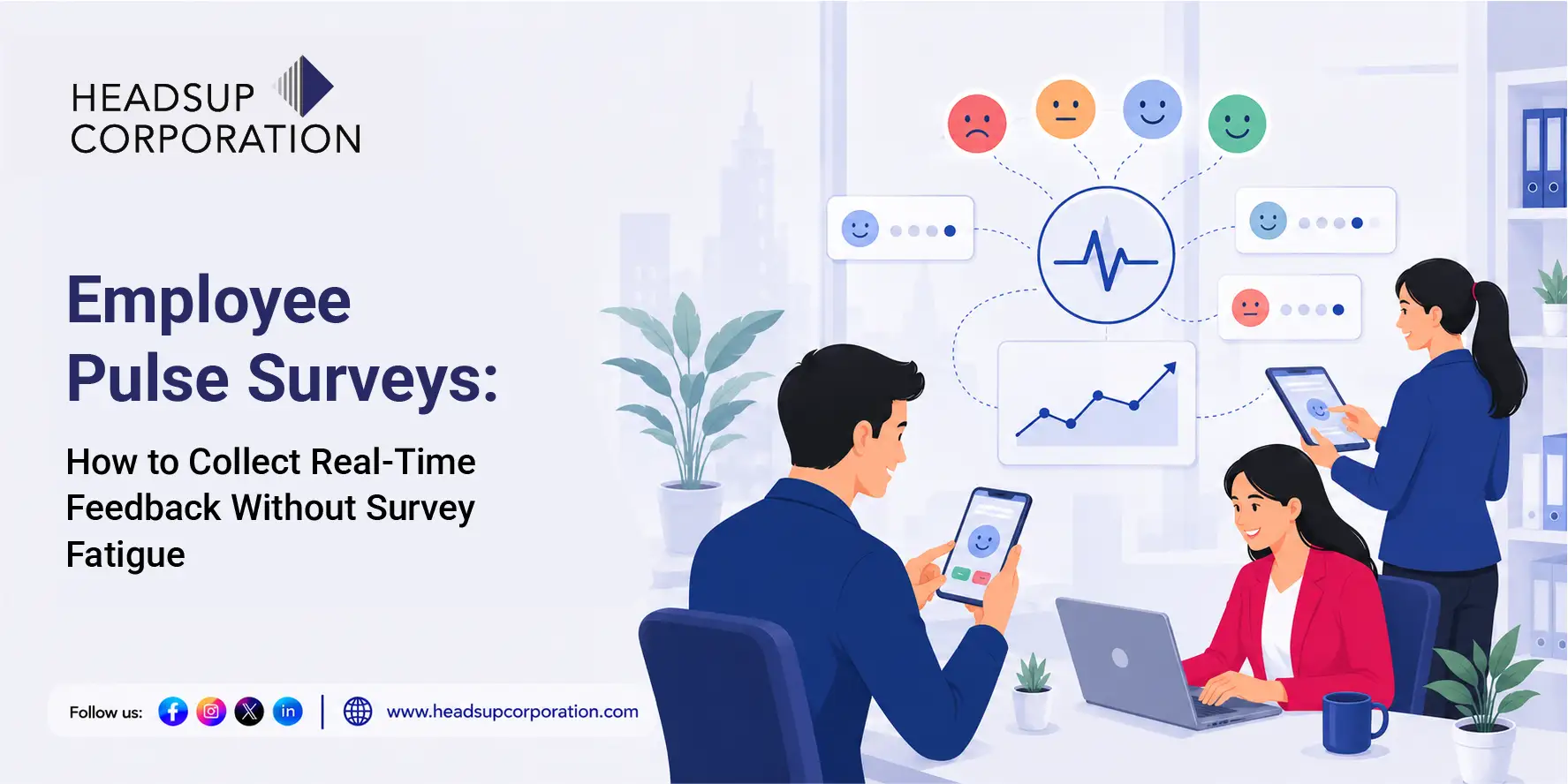
Employee pulse surveys have become one of the most widely adopted tools in modern HR: short, frequent check-ins designed to capture how employees are feeling in near real time. Done well, they give organizations an early warning system for disengagement. Done poorly, they become just another thing employees learn to ignore.
What Makes a Pulse Survey Different from a Traditional Survey
The defining feature of a pulse survey isn’t the questions; it’s the cadence and length. Where an annual engagement survey might run 50-60 questions once a year, a pulse survey typically asks 3-5 questions on a weekly, biweekly, or monthly basis. The shorter format is what makes frequent collection sustainable; nobody wants to fill out a lengthy questionnaire every two weeks. This structure makes pulse survey tools particularly good at catching short-term shifts, a spike in dissatisfaction after a reorg, early signs of burnout during a busy quarter, or reaction to a new company policy that an annual survey would only catch months later, if at all.
The Survey Fatigue Problem
The biggest risk with frequent surveying is fatigue: response rates dropping over time as employees start to feel over-surveyed, especially if they don’t see any evidence that previous responses led to change. Once fatigue sets in, the data itself becomes less reliable; rushed, low-effort answers don’t reflect real sentiment, which defeats the purpose of collecting it in the first place.
Practical Ways to Avoid Fatigue
Organizations that sustain healthy pulse survey participation over time tend to follow a few consistent practices:
- Keep it short. Five questions or fewer per pulse check is a reasonable ceiling for most organizations.
- Rotate the topics. Cycling through different themes (workload, management, tools, culture) keeps the survey from feeling repetitive.
- Respect the calendar. Avoid sending pulse surveys during known high-stress periods, like the last day of a fiscal quarter.
- Close the loop visibly. Share a brief summary of results and planned actions after each cycle; this is the single biggest driver of continued participation.
- Let employees see progress. If a previous pulse survey flagged an issue, referencing what changed as a result reinforces that responses matter.
Choosing the Right Frequency
There’s no universal “correct” cadence; it depends on organizational size, change velocity, and what you’re trying to measure. A fast-growing startup navigating frequent changes might benefit from weekly pulses on a narrow set of questions, while a more stable organization might find monthly or quarterly pulses sufficient. The right test is whether the frequency lets you catch problems early without asking employees to do more than the value they get back.
Using Pulse Data Effectively
Collecting frequent data is only useful if someone is actually reviewing it in a timely way. The best implementations pair pulse surveys with dashboards that flag meaningful shifts automatically, so HR and managers aren’t manually re-reading every result each cycle looking for changes; they’re alerted when something moves enough to warrant attention.
Pulse surveys work when they’re treated as an ongoing conversation rather than a data-collection obligation. The organizations getting the most value from them keep the format light, stay disciplined about frequency, and, most importantly, make sure employees can see that their five minutes of feedback each cycle is actually leading somewhere.