Every HR leader has seen it happen: a survey goes out, employees respond honestly, results get reviewed internally, and then nothing visibly changes. This is the single most common failure point in feedback programs, and it has a name: a broken feedback loop. Closing it is what separates feedback programs that build trust from ones that quietly erode it.
Why the Loop Breaks
Feedback loops tend to break down for a few predictable reasons. Sometimes results get reviewed but no one is assigned ownership over acting on them. Sometimes action does happen, but it’s never communicated back to employees, so from their perspective nothing changed. And sometimes the sheer volume of feedback, especially with acting on employee feedback from frequent pulse survey, overwhelms HR teams without a system to prioritize what matters most.
Whatever the specific cause, the effect is consistent: employees notice when their input doesn’t lead anywhere, and they respond by disengaging from the process itself. Response rates drop, comments get shorter and less candid, and the data quality declines right when the organization needs it most.
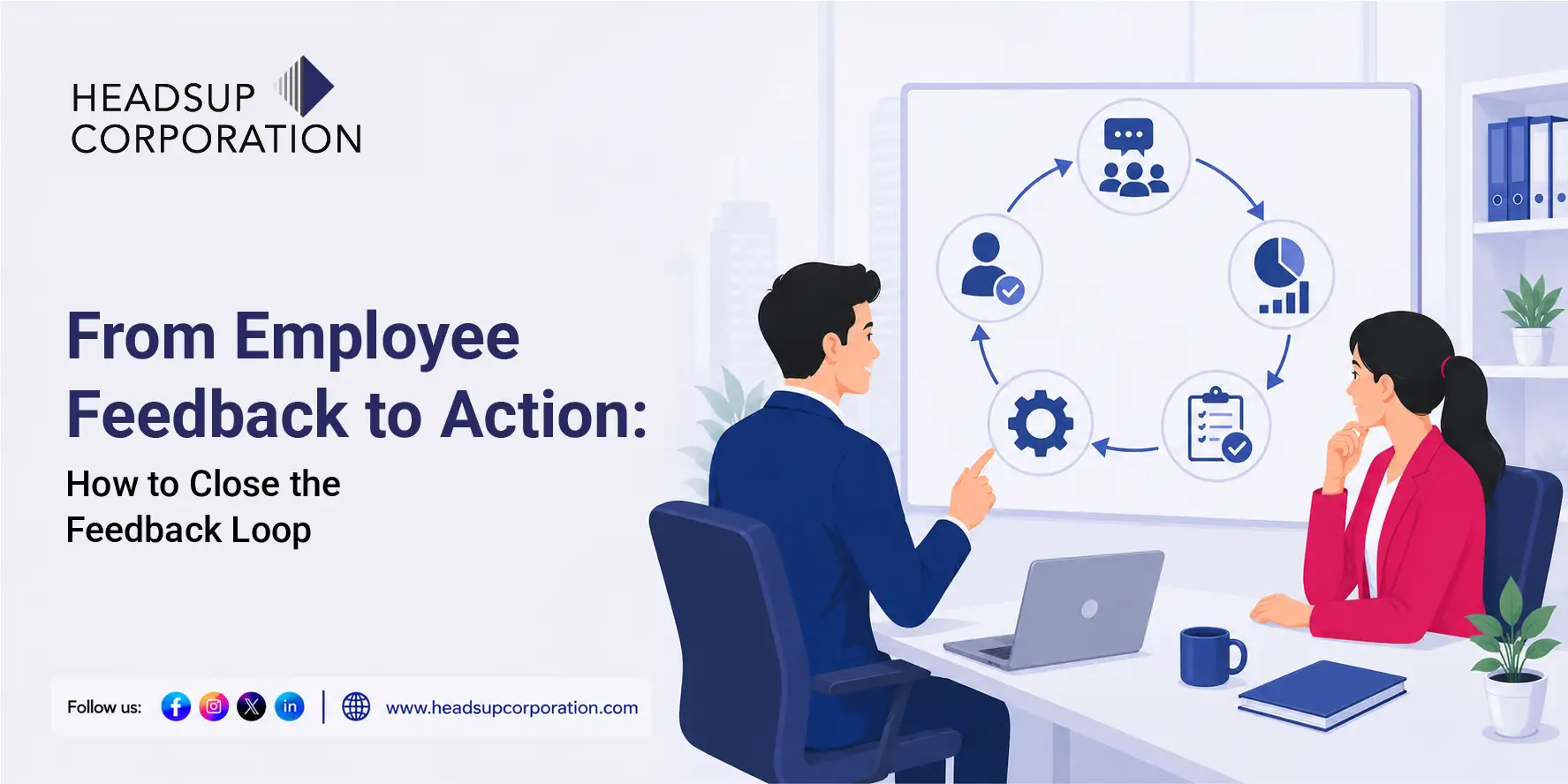
The Four Stages of a Working Feedback Loop
A functioning loop generally involves four distinct stages, each of which needs a clear owner:
- Collect — gathering feedback through surveys, open channels, or check-ins.
- Analyze — identifying themes and prioritizing which issues need attention.
- Act — assigning ownership and taking concrete steps to address flagged issues.
- Communicate — sharing back what was found and what’s being done about it, even when the answer is still in progress.
Most feedback programs are reasonably strong at the first two stages and weak at the last two, which is precisely where trust is won or lost.
Practical Ways to Close the Loop
Closing the loop doesn’t require solving every issue raised, it requires visible follow-through. A few practices that consistently work:
- Share a summary after every survey cycle, even briefly, outlining what was heard and what’s being done.
- Distinguish between quick wins and long-term issues, and communicate both categories, so employees understand that not everything can be fixed overnight.
- Name specific owners for major themes, so accountability doesn’t disappear into a general “HR is looking into it.”
- Revisit past issues in future surveys, asking whether a previously flagged problem has improved, which shows employees the loop is ongoing rather than one-off.
Feedback Management as an Ongoing Discipline
Closing the loop isn’t a single action taken after each survey, it’s an operating discipline that needs to be built into how the organization runs. This often means integrating feedback review into existing rhythms, like leadership meetings or manager one-on-ones, rather than treating it as a separate HR initiative that competes for attention.
Platforms with built-in feedback management and action-tracking features can support this discipline, but the tool alone doesn’t guarantee it happens, the habit of following through has to be established and maintained by the people running the program. The value of an employee feedback program isn’t determined by how much data it collects, it’s determined by what happens after. Employees can tell the difference between a survey that leads somewhere and one that disappears into a dashboard. Closing the loop consistently, even imperfectly, is what turns a feedback program from a compliance exercise into something employees actually trust and engage with over time.