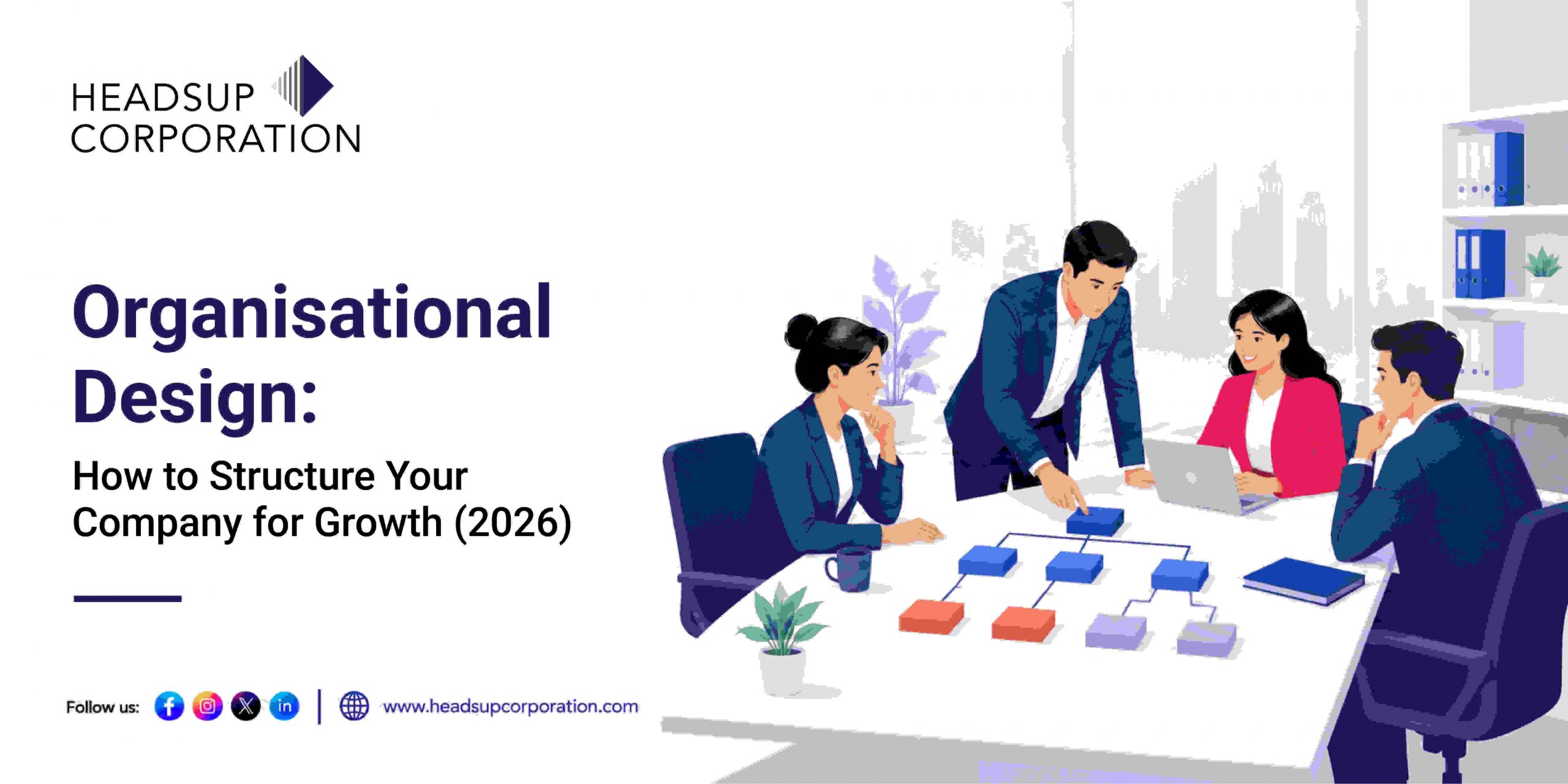
Most Indian companies don’t fail at strategy, but often they fail at structure. A founder hires fast, adds a few managers, and six months later nobody knows who approves what, decisions stall in WhatsApp groups, and the org chart looks nothing like how work actually happens. Organisational design is the discipline of fixing that before it becomes expensive.
At its simplest, organisational design is the deliberate arrangement of roles, reporting lines, decision rights, and workflows so that structure serves strategy rather than fighting it. McKinsey’s global research this year found that two-thirds of leaders describe their organisations as overly complex and inefficient, and that familiar plays like restructuring, delayering, and cost-cutting are hitting diminishing returns. The bigger lever now is redesigning how work actually flows: fewer handoffs, clearer decision points, less duplicated approval.
Why 2026 is turning out to be different
Two forces are colliding for Indian companies right now. First, AI is changing what roles even need to exist, McKinsey found 88% of leaders report their organisations are deploying AI, but most are still stuck in piecemeal use cases rather than structural change. Second, India’s own compliance landscape is shifting under the four Labour Codes (Wages, Industrial Relations, Social Security, and Occupational Safety), which change how you classify roles, define “employee” vs “worker,” and structure contracts and shift patterns. A structure built for 2019 India doesn’t hold up against 2026 obligations.
Common structural models (and when each works)
- Functional structure, departments organised by specialism (sales, product, ops). Works well for single-product startups under 50 people where coordination costs are still low.
- Divisional structure, organised by product line, geography, or customer segment. Useful once you have distinct P&Ls or are expanding beyond one city or one product.
- Matrix structure, dual reporting across function and project/product. Powerful for scale-ups running multiple concurrent initiatives, but it multiplies decision friction if role clarity isn’t airtight.
- Flat/networked structure, fewer management layers, wider spans of control. Common in early-stage startups, but breaks down past roughly 40-60 people without clear decision-rights documentation.
A practical 5-step redesign process
- Map current-state decision rights, not the org chart, the actual who-decides-what. Most misalignment lives here, not in job titles.
- Anchor structure to your 12-18 month strategy; growth by geography needs a different shape than growth by product line.
- Right-size spans of control; Indian mid-market companies often over-layer management; a manager overseeing 3-4 people when 8-10 would work is a structural cost, not a quality safeguard.
- Build the Labour Code and DPDP Act 2023 checks into the redesign; classification, data-handling roles, and reporting lines for grievance and POSH/ICC compliance need to be explicit in the new structure, not bolted on after.
- Pilot before company-wide rollout, redesign one function or business unit first, measure decision-cycle time and role clarity, then scale the model.
How Headsup approaches organisational design
Headsup Corporation works with founders and growth-stage teams across Delhi NCR and Mumbai to translate strategy into structure- not templated org charts, but designs stress-tested against Indian labour law, POSH/ICC obligations, and the realistic hiring runway of an MSME budget. Our diagnostic starts with decision-rights mapping, not headcount planning, because that’s where most Indian companies actually lose speed. Turnaround on a structural audit is typically under two weeks.
Not sure if your current structure is helping or hurting your growth plan? Headsup Corporation runs a structural diagnostic for founders and HR leaders across India, get in touch to map your decision rights before your next hiring round.