If you have ever sat through an annual appraisal that felt more like a courtroom hearing than a coaching conversation, you already understand why the traditional Indian performance management system is broken. Discussions on Reddit threads such as r/IndianWorkplace and r/developersIndia are filled with employees describing year-end reviews as opaque exercises in bell-curve forced ranking, where promotions hinge on manager memory rather than measurable contribution.
A widely upvoted thread from late 2025 summed it up bluntly: appraisal season in most Indian firms is when good performers update their resumes and bad managers update their excuses. The data backs the sentiment. Research from McKinsey indicates that 70% of CEOs believe their existing performance management processes do not accurately reflect employee contribution, which explains why building a performance management system India businesses can actually trust has become a boardroom priority in 2026.
Why a Modern Performance Management System India Companies Need Looks Different
A performance management system is no longer a once-a-year ritual; it is a continuous, data-driven process that aligns individual goals with business outcomes, and feeds promotion, learning, and retention decisions in real time. The shift away from the bell curve toward OKR-led, continuous feedback models has been documented by Harvard Business Review and adopted in India by enterprises like Infosys, Wipro, and Tata Steel. When Adobe replaced annual reviews with continuous check-ins, the company recorded a 30% drop in voluntary turnover, a result repeatedly cited as proof that the right system pays for itself.
Core Pillars of a Performance Management System India Businesses Should Build
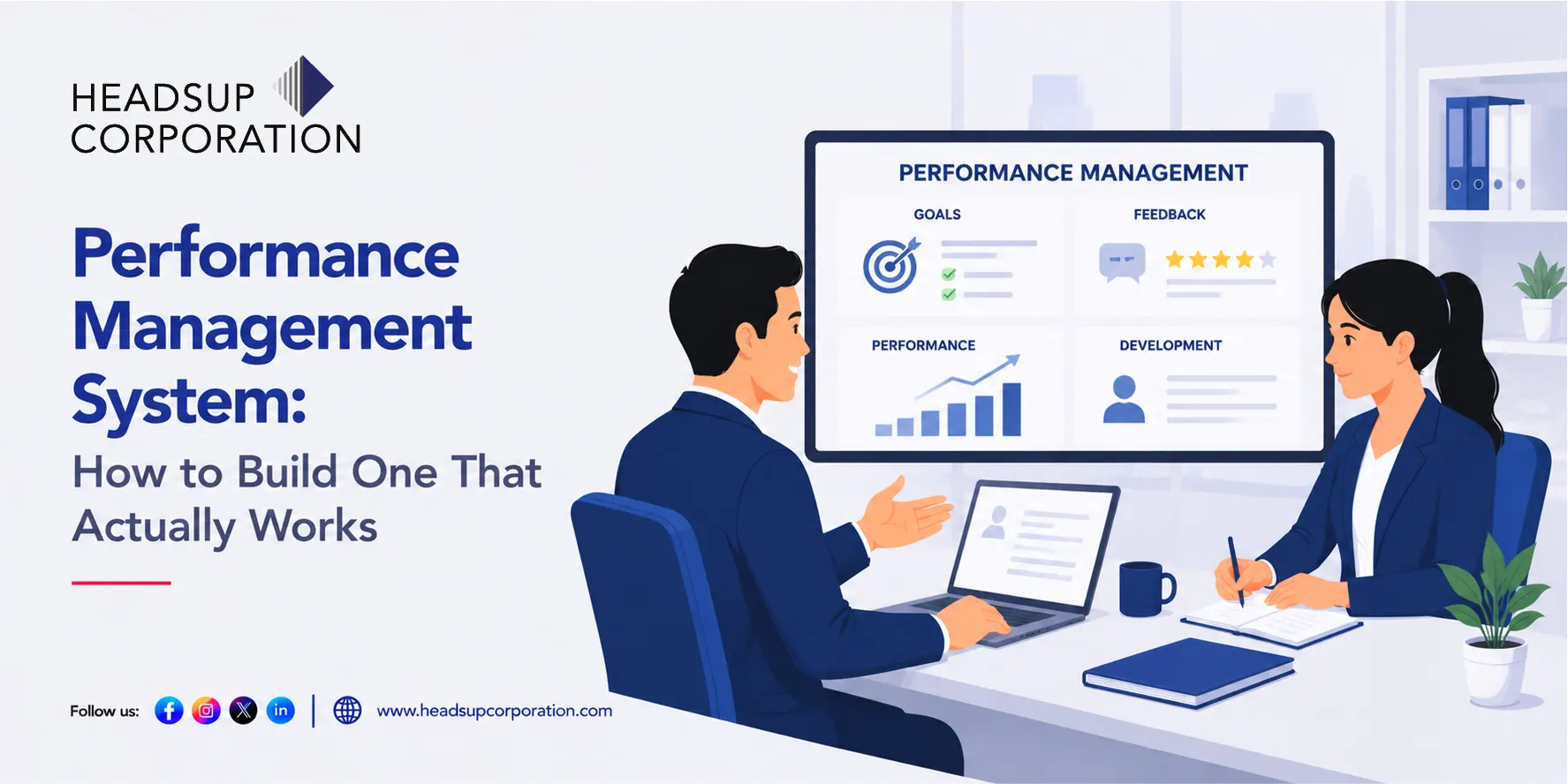
A functional system rests on five pillars that work together rather than in isolation.
The first is goal clarity through OKRs or SMART KRAs that cascade from company strategy down to the individual desk, ensuring every employee can see how their week connects to the quarter.
The second is continuous feedback, replacing the annual appraisal with monthly or quarterly check-ins where managers coach rather than judge, a practice Gallup links to teams that are three times more likely to be actively engaged.
The third is 360-degree input, drawing perspective from peers, subordinates, and cross-functional partners to reduce the manager-bias problem that dominates Indian appraisal complaints online. The fourth is calibration, where leadership teams sit together to normalise ratings across departments so that a Mumbai sales team and a Bengaluru engineering pod are evaluated on comparable evidence. The fifth is data governance under the DPDP Act 2023, which means consent-based collection of performance data, audit trails, and clear retention policies, because performance records are personal data and now sit squarely inside India’s privacy regime.
How to Roll Out a Performance Management System India Employees Will Actually Use
Implementation fails when it begins with software selection rather than design. The sequence that works is to define the business outcomes first, map the competencies that drive those outcomes, train managers on coaching conversations before they touch any tool, and only then choose the technology layer.
Indian organisations adopting continuous models report up to 10x ROI by saving nearly 30 minutes per employee per day, but the gains evaporate when the rollout skips manager training. Communication matters as much as configuration; employees need to understand what is changing, why ratings will look different, and how feedback will flow.
How Headsup Helps Indian Companies Build Performance Systems That Work
Headsup Corporation has spent years designing performance management systems for Indian startups and growing enterprises that cannot afford the cost of a bad rollout. Our consultants work alongside your leadership to map competency frameworks, design OKR cascades that fit Indian business cycles, train managers on continuous feedback conversations, and ensure your performance data flows comply with the DPDP Act and the new Labour Codes.
Whether you are moving off spreadsheets for the first time or restructuring an underperforming system, we build appraisal frameworks your managers will use and your employees will trust.
CTA: Ready to build a performance management system that drives real outcomes? Talk to Headsup Corporation for a tailored consultation.