Small businesses have this peculiar belief that exit interviews are a ‘big company thing.’ Something multinationals do with HR software and quarterly dashboards. For a team of fifteen or thirty people, it can feel a bit much. But here’s the thing, the smaller your team, the more every departure actually costs you. Replacing a single employee can run anywhere from half to twice their annual salary when you account for recruitment, onboarding, and the productivity gap in between. For a company with twenty people, losing two or three key hires in a year isn’t just a headache. It can genuinely threaten the business.
And yet, most small businesses have no idea why people are leaving. From making assumptions to random guesses they tell themselves it was about money, or that the person ‘just wanted a change.’ Mostly it can be true but often, it isn’t.
What Structured Actually Means
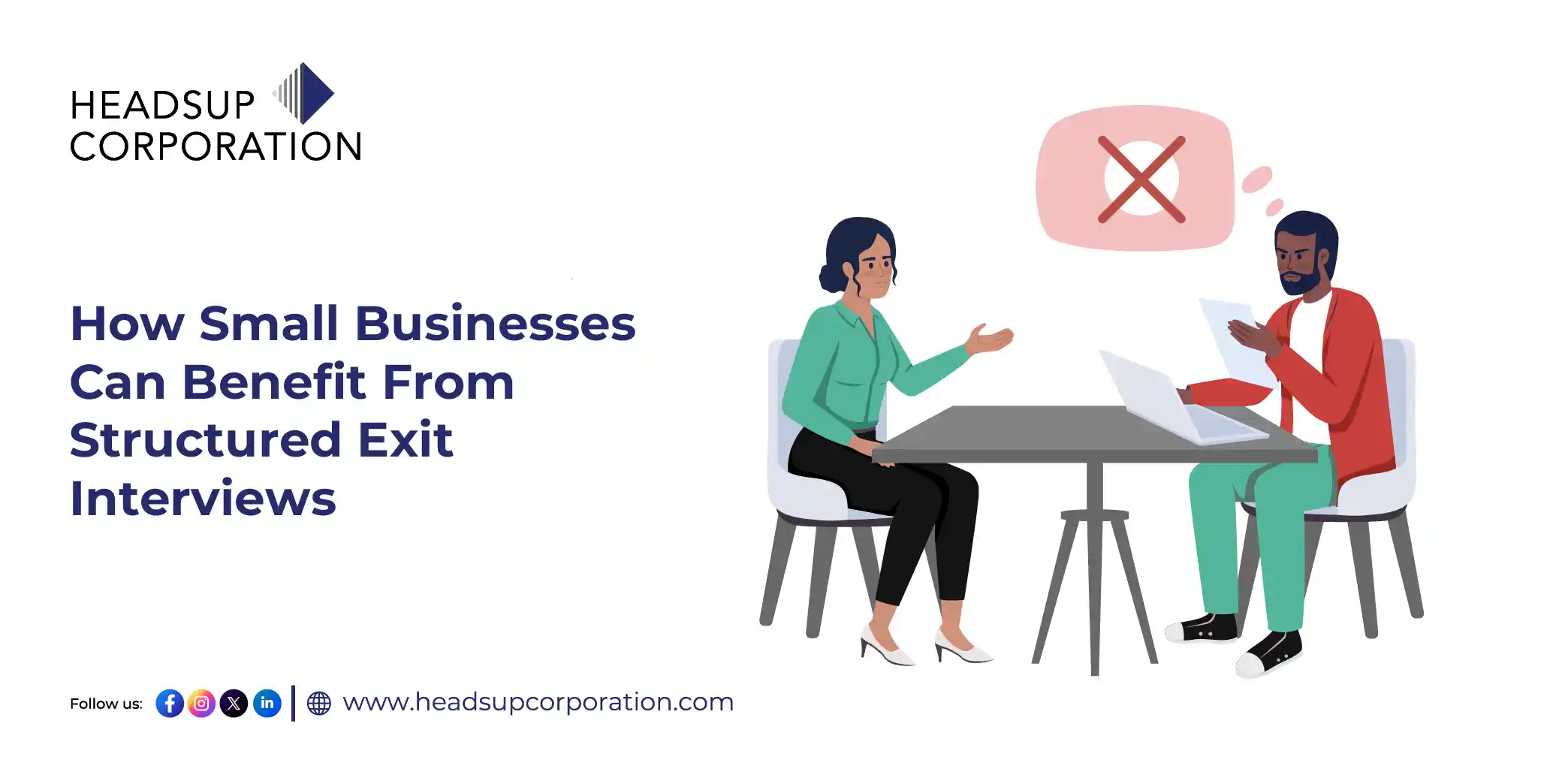
A structured exit interview isn’t a casual chat over coffee on someone’s last day. It’s a consistent set of questions, asked in a consistent way, that allows you to compare answers across different employees over time. Why does consistency matter? Because if you ask everyone different things, you end up with a pile of anecdotes and no way to identify patterns. For a small business, a structured approach doesn’t need to be complicated. Five to eight core questions, asked by the same person each time, with responses documented in a standard format.
The Specific Ways Small Businesses Benefit
- First, you catch fixable problems early. In a large organisation, a bad manager might cause five or six people to leave before the pattern becomes visible. In a small business, two or three exits from the same team is a crisis. Structured exit interviews surface these patterns before they compound.
- Second, you get honest feedback about your culture and processes, the kind you don’t get in performance reviews or all-hands meetings. People are surprisingly candid when they’ve already decided to go. They’ll tell you that the onboarding was chaotic, or that no one explained the career path clearly, or that one particular team dynamic was toxic. These are fixable things.
- Third, it signals to remaining employees that you take people seriously. Word of a respectful, thoughtful exit process travels. It shows that the company values the relationship even as it ends. That matters more than most employers realise, especially in tight-knit industries where everyone knows everyone.
The Counter-Argument Worth Addressing
Some small business owners feel that structured exit interviews create awkwardness. ‘We’re a close team,’ they say. ‘It’ll feel clinical.’ That’s a fair concern, actually. The solution is to have exits conducted by a neutral third party, someone outside the team who the departing employee doesn’t have a personal history with. This removes the awkwardness entirely, and tends to produce far more honest responses than even the friendliest in-house conversation.
Another objection is time. Small business owners are stretched. But a well-run exit interview takes forty-five minutes, and the information it generates may save you months of the wrong kind of problem-solving.
Starting Small Is Fine
You don’t need a dedicated platform or a HR analyst to start. A simple template, a quiet room, and a commitment to actually reading the responses is enough. Over time, as you accumulate data, the value compounds. You start to see which roles churn fastest, which managers retain people longest, which benefits actually matter to your team. The businesses that tend to struggle with retention, in my experience, are the ones that respond to every departure as a one-off event. Structured exit interviews are, at their core, just a way of making sure you’re collecting that information properly.
Headsup Corporation offers structured exit interview services built specifically for the realities of small and mid-sized businesses in India. We understand that your HR team is likely wearing several hats, and a rigorous exit process isn’t always feasible in-house. That’s where we come in. Our consultants conduct confidential exit interviews on your behalf, using a structured methodology tailored to your business size and industry. Every interview produces a detailed report with theme analysis, so you’re not left deciphering notes, you’re reading conclusions. We also offer periodic retention audits that help small businesses spot risk before it becomes turnover.
Also Read:
- What is an Exit Interview?
- Benefits of Exit Interviews for Employees
- How to Conduct Effective Exit Interviews
- Exit Interview Data Analysis Process
- Exit Interview Trends in 2026
Need structured exit interviews for your small business? Headsup Corporation’s Milestones tool works equally well for small businesses — simple setup, powerful insights, zero complexity. 👉 Try Milestones Today