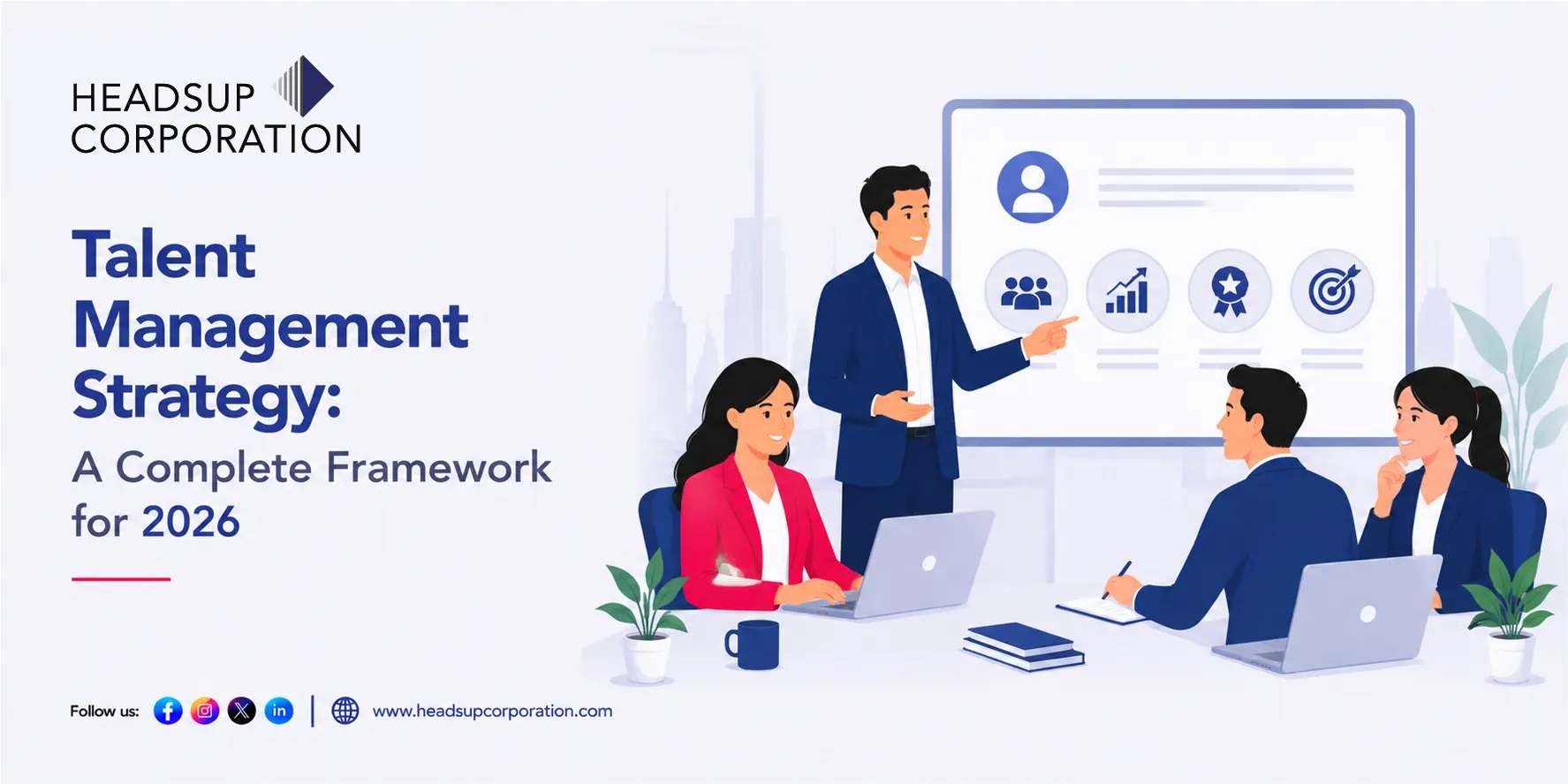
A coherent talent management strategy has become indispensable for organisations that wish to compete effectively in a market where skilled professionals are scarce and the cost of poor people decisions is high, and the most successful Indian businesses now understand that managing talent is not a series of disconnected activities but rather an integrated discipline spanning the entire employee lifecycle.
we help startups, MSMEs and enterprises design a talent management strategy that aligns their people capabilities with their commercial ambitions, ensuring that the right individuals are attracted, developed, engaged and retained in pursuit of clearly defined organisational goals.
Defining a Talent Management Strategy That Aligns With Business Goals
An effective talent management strategy begins with a clear understanding of where the organisation is heading and the specific capabilities it will require to get there, because talent decisions made in isolation from business strategy inevitably produce misalignment, wasted investment and frustrated employees.
By starting with the organisation’s vision and translating it into a precise picture of the skills, roles and leadership capacity needed over the coming years, HR leaders can ensure that every element of their talent management, from recruitment through to succession planning, contributes directly and measurably to the achievement of the organisation’s most important objectives.
Attracting and Acquiring the Right Talent
The attraction and acquisition phase forms the foundation of any talent management strategy, because the quality of the people an organisation brings on board sets the ceiling for everything that follows, and in a competitive Indian market this requires a compelling employer brand, a well-designed candidate experience and recruitment processes that are both rigorous and respectful.
Organisations that invest in understanding what their ideal candidates value, that communicate their purpose and culture authentically, and that move swiftly to secure the best applicants will consistently build stronger teams than competitors who treat hiring as a reactive scramble to fill vacancies.
Developing and Engaging Your People for the Long Term
Once talent has been acquired, the development and engagement phase determines whether that talent flourishes or stagnates, and the strongest talent management strategy frameworks place continuous learning, meaningful career pathways and regular feedback at the centre of the employee experience.
Indian organisations that provide clear opportunities for growth, that invest in both technical and leadership capabilities, and that foster a culture of genuine engagement will find that their people not only perform at a higher level but also remain committed for longer, reducing the costly cycle of attrition and rehiring that undermines so many growing businesses.
Retaining Top Performers and Planning for Succession
Retention and succession planning represent the dimensions of talent management strategy that protect an organisation against the disruption caused by the departure of key individuals, and the most resilient companies identify their critical roles and high-potential employees early, then deliberately prepare successors so that the loss of any single person never threatens continuity.
By combining competitive rewards, recognition and growth opportunities with structured succession planning, Indian organisations can retain their most valuable contributors while ensuring that leadership capability is continuously developed from within rather than expensively sourced from outside under pressure.
Measuring the Success of Your Talent Management Strategy
To ensure that a talent management delivers genuine value, organisations must establish meaningful metrics that track progress across the entire lifecycle, including measures such as quality of hire, internal mobility rates, engagement scores, retention of high performers and the strength of the leadership pipeline.
Headsup Corporation works with clients to define and monitor these indicators, because a talent management strategy is most powerful when its impact can be demonstrated through evidence, allowing leaders to refine their approach continuously and to invest their resources where they will generate the greatest return for both people and the business.