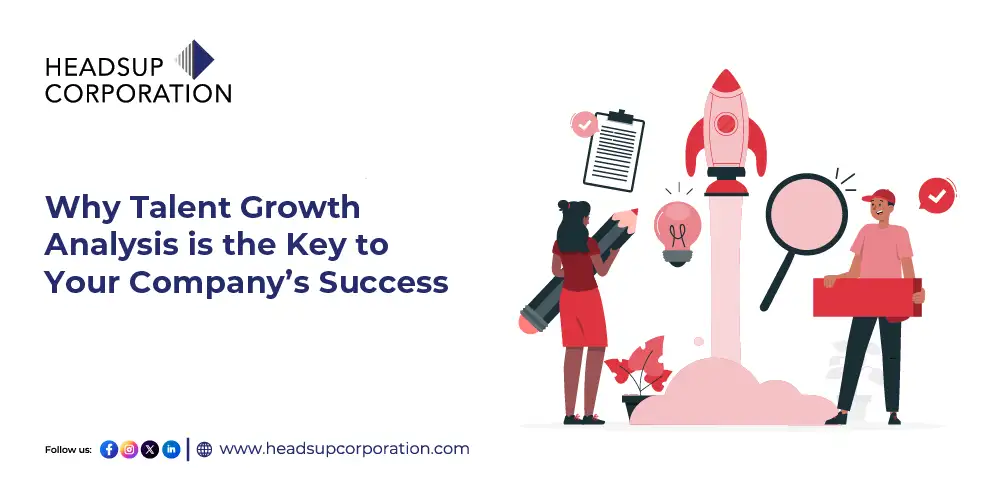
Most organisations put a lot of energy into hiring the “perfect candidate”. Far less attention goes into what happens after people join. Did you know that according to a study, over 90% of organisations worry about retaining critical skills, yet only a small number feel confident about the strength of their internal talent pipelines. That gap doesn’t usually come from a lack of effort but from a lack of visibility.
In most organisations, performance is tracked closely, but growth, not so much. Many companies know who is doing well today, but struggle to explain who is actually developing for leadership roles. Talent Growth Analysis attempts to close that gap. By making skill development, potential, and readiness more visible over time, organisations are better positioned to make clearer decisions.
Looking Beyond Performance
Performance reviews are useful, but they mostly capture a moment in time. One of the major drawbacks employees feel due to performance reviews is that it’s done annually, hence all the progress isn’t captured sometimes. They tell us how someone is doing now, not how they are evolving. Talent Growth Analysis shifts the lens from short-term outcomes to long-term capability building. It looks at how skills are progressing, how quickly individuals are learning, and whether they are realistically ready for what comes next.
Connecting Growth to Business Needs
Talent Growth Analysis is most useful when it stays close to the business. As organisations scale, adopt new tools, or enter unfamiliar markets, the skills they rely on tend to change faster than their structures. In the absence of clear growth data, many companies default to external hiring as a quick fix. By understanding how internal capability is evolving, organisations can spot future skill gaps earlier and start preparing people before those gaps become urgent.
Making Development More Meaningful
Most employees don’t leave because they want more training. They leave because they can’t see where they’re headed. KRA’s seems stagnant, directionless or simply vague. Talent Growth Analysis helps bring that direction into focus. Development plans become more specific, tied to actual roles and future needs rather than generic programs offered to everyone.
The Headsup Approach
At Headsup, we see Talent Growth Analysis as part of a broader plan, not a standalone exercise. Our work focuses on mapping growth across roles, and functions while keeping business context front and centre. Through practices like diagnostics, growth mapping and practical insights, we help organisations move beyond identifying gaps to building realistic growth pathways. The aim isn’t complexity, it’s clarity that holds up as the organisation grows.